Why air-gapped? Welcome to edition two of our Newsletter.
Why air-gapped? Welcome to edition two of our Newsletter.
Welcome to edition two of our Newsletter.
Last month we flagged “why air-gapped?” as a future topic. It’s the question we get asked most often by customers, partners, and people trying to work out what’s actually different about how we deploy. So this edition is the long answer.
There’s an easy way to retrofit optimization onto a chilled water plant, and there’s the way we do it. The easy way is to install a controller, physical or virtual, that sits on top of the building management system and takes over. It overrides setpoints. It issues commands. It becomes another box on the network, and another system the operator has to trust.
We don’t do it that way. We made the architectural decision early to deploy through the existing BMS instead, and almost everything our customers care about flows from that choice.
What we deliver
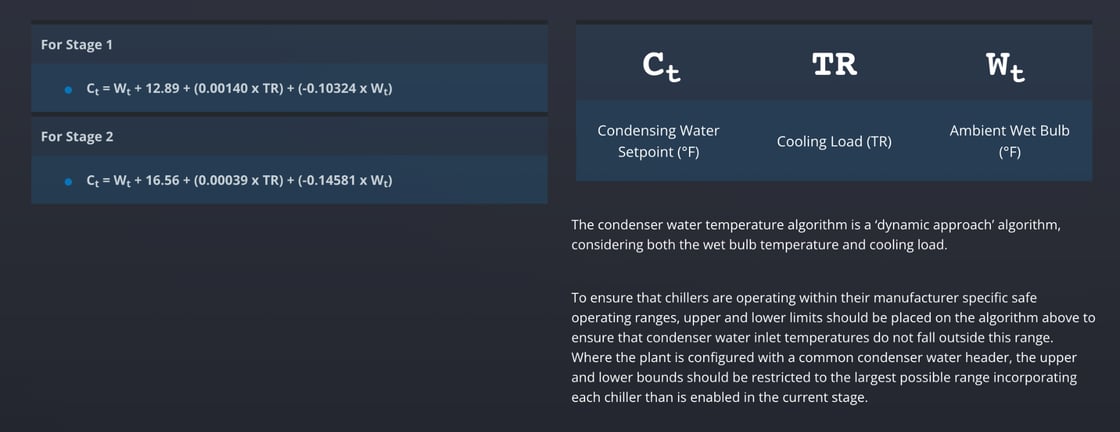
A short, readable functional description. A handful of algorithms inside the existing BMS, with coefficients tuned by our optimization engine and implemented by the incumbent BMS contractor. No hardware. No cabinet. No gateway. No new system to commission.
The work behind that output is heavy. The data pipeline is long, the modelling is computationally expensive, and the optimization runs through millions of operating scenarios before we land on the changes worth making. But the output is light, and the customer site barely knows we were there.
Why this beats a black box
A short, readable functional description. A handful of algorithms inside the existing BMS, with coefficients tuned by our optimization engine and implemented by the incumbent BMS contractor. No hardware. No cabinet. No gateway. No new system to commission.
The work behind that output is heavy. The data pipeline is long, the modelling is computationally expensive, and the optimization runs through millions of operating scenarios before we land on the changes worth making. But the output is light, and the customer site barely knows we were there.
Lower cost, faster payback. No hardware to ship, no commissioning visit, no new system to maintain. Cost to deploy comes down and payback periods come in.
The BMS stays the BMS. Bolt-on controllers tend to be the first thing switched off when something goes wrong on site. We see it constantly in the field. By keeping the BMS as the system of record, we don’t add a layer that operators have a reason to disable. The control logic improves. The chain of command doesn’t change.
Cybersecurity stops being the bottleneck. Large infrastructure, commercial offices, and especially data centres are getting much more careful about what gets connected to plant networks. A new controller usually means a new gateway, a new cloud connection, and a new approval cycle that can run six to twelve months. Our deployment is fully air-gapped. The BMS is already on the network, already approved, already trusted. We’re not adding to that footprint. Timelines compress from months to weeks, and the bottleneck moves to scheduling the contractors and agreeing an implementation date.
Your existing BMS investment starts working harder. A modern BMS, calibrated sensors, and a historical data infrastructure represent millions of dollars and years of operational effort. Tuning the algorithms inside that system is what makes that investment pay off. You get more from what you’ve already bought.
Transparency by design
The other side of going through the BMS is that everything we do has to be legible to the people running the plant.
Every deployment produces a functional description, and we generate it with the people who know the plant. Mechanical contractors. BMS engineers. Facilities management. Plant operators. Their input shapes the constraints we hand to the optimizer: where to look for savings, where not to, what’s off-limits, what’s already been tried.
That site knowledge is itself a form of data, and feeding it into the modelling is how we make sure the optimization finds gains in places everyone is comfortable with. We’re not pushing equipment to the edge of its envelope. We’re improving efficiency and mechanical performance while keeping stability, cooling delivery, and equipment health intact.
Standardisation across portfolios
A commercial office portfolio might have ten different BMS vendors and ten different control philosophies. Deploying an Exergenics functional description across those buildings standardises the underlying logic. Gold-standard controls, aligned with frameworks like ASHRAE Guideline 36. Staging based on field demand instead of return water temperature. Approach temperature modulating dynamically against load and wet-bulb. A facilities operator can move between buildings and recognise what the plant is doing and why.
The framework is the same across sites. The coefficients are unique to each one.
You own the IP
This is the part that surprises people, so it’s worth saying clearly. Our IP at Exergenics sits in the optimization process, the machine learning, the data pipeline, and the algorithm generation. The output — the tuned algorithms inside your BMS — is owned by the building owner. For life. No licensing. No maintenance contract. No gatekeeping.
We’re confident in that position because we’ve worked across more than 150 sites and we know how plant-specific the coefficients are. Age of equipment, equipment type, plant configuration, local weather, load profile. Lift the algorithms from one building and drop them into the building next door and they don’t reproduce the result. The defensibility is in how we generate the functional description. What we hand over is yours.
Why we made the work harder
Lower cost. Faster timeline. Lower risk. More value from the existing BMS. A transparent process. Standardised controls. No lock-in.
We chose the harder engineering problem because it’s the one that gives the customer the better answer. Seven years in, more than 150 sites in, we’re more convinced of it than ever.
Next month we’ll get into something more technical: the condenser water temperature problem, and why “wet bulb plus four” is such a stubborn rule of thumb to beat.
Got questions, topic ideas, or want to talk shop? Reply to this email. We read every one.
Thanks for reading,
Iain Stewart
Cofounder & CEO