What a 38°C New York heat wave revealed about hospital chilled water resilience and plant operators
What a 38°C New York heat wave revealed about hospital chilled water resilience and plant operators
A week on the ground in New York with the people who run the plants, in the middle of a heat wave.
Welcome to edition four. This one is a little different. The last few editions have been technical: physics, control logic, setpoints. This month we are writing about people. We spent last week in New York with the chief engineers, plant operators and facility managers who run chilled water plants day to day, and we picked quite a week to do it. The city was heading into a multi-day heat wave, with temperatures over 100°F and a grid straining to keep up. So this edition is a few stories from the ground: how the people responsible for these plants think about efficiency, what a heat wave looks like from inside a plant room, and what we took away from it.
.jpeg)
The show must go on
Our first meeting was at a performing arts centre, an implementation meeting for the first algorithm we are deploying there: a dynamic condenser water temperature reset. If you read last month's edition, you know exactly what that is. Until now we had been working with management and their external energy manager. This was our first time in the room with the chief engineer and the operators who run the plant every day.
Most of the conversation was about what would not change. The algorithm runs in the background. It does not touch how, why or when the operators stage their machines on and off. And at a performing arts centre, staging is a serious skill. You are staging on equipment ahead of time to anticipate the load of a full house, working around rehearsal and performance schedules, drawing on decades of experience about how the building behaves. All of that stays exactly where it belongs, with the operators. The algorithm quietly finds a more efficient setpoint underneath the decisions they are already making, and it does not get in the way of their real KPIs: maintain conditions and run the plant safely every single day.
The response in the room was heartening. But the moment that stuck with me came when the term “mission-critical” came up. It is a label the industry reserves for data centres and hospitals, places where a fault turns into a disaster very quickly. The team stopped us there. For a performance, this building is mission critical. The company on that stage has been rehearsing for months. Some shows are only performed once. If conditions drift, the audience notices, the performers feel it, and there is no second take.
HVAC is invisible when it is done well. Three generations of plant operators at this venue have kept it that way, and the pride they take in that was written all over the room. It changed how I think about the term. Mission critical is not a building type. It is a promise a team makes, and there are far more of these buildings around than the data centre definition admits.
A text from Con Edison
Later in the week we sat down with a major hospital network to talk through wider deployments across their sites: how the first few implementations are tracking, how we interface with their BMS contractors, and what the operators at each site need to know about what will and will not change.
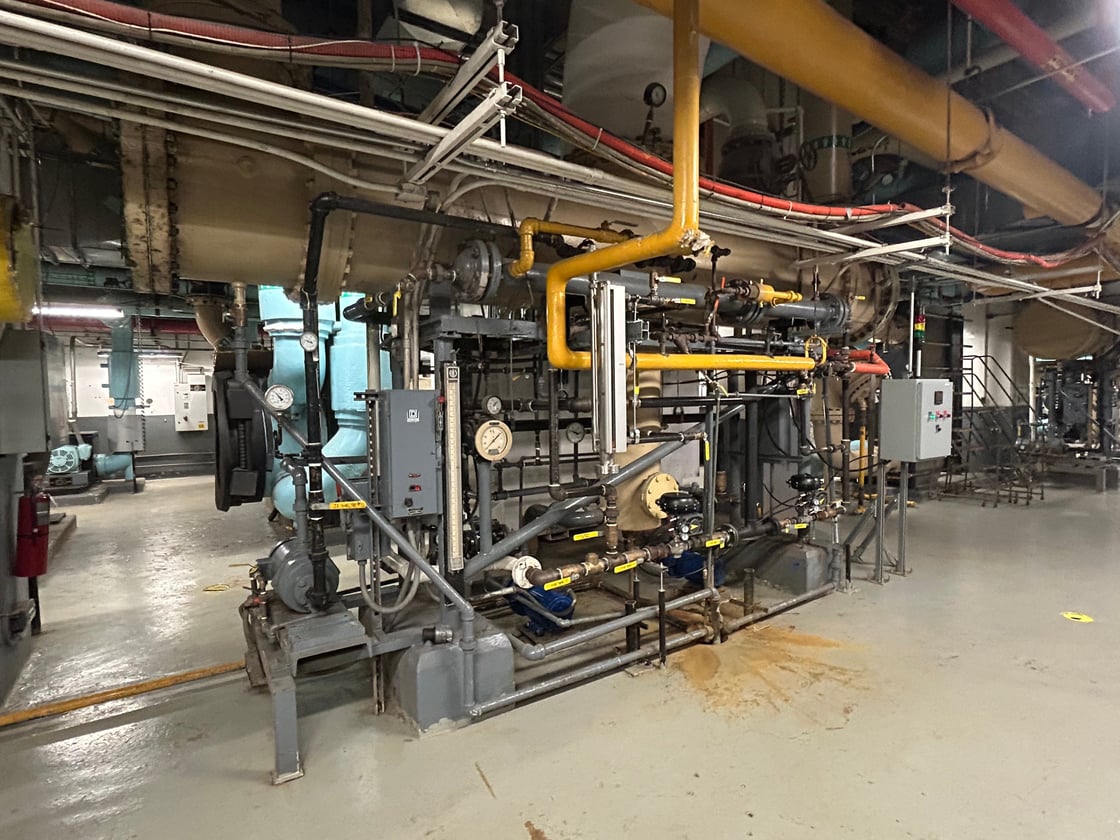
Midway through the meeting, a text message arrived from Con Edison, the network operator. The heat wave was about to peak, and the grid needed curtailment. Reduce electrical demand, or the city risks blackouts and brownouts.
What happened next was the impressive part. No panic. A very's experienced team, under very good leadership, simply started working the plan: switching cooling from electric chillers to steam. New York has a lot of steam chillers precisely for these peak days, something you don’t see in Australia. The conversation was about sequencing the changeover in the coming hours and days, and the hospital went on making the same chilled water while drawing far less from the grid.
Two days later we were in a commercial office tower when the same text message arrived. A large share of Manhattan participates in these demand response programs. There are payments from the network operator for doing it, but the real point is grid stability. On the hottest days of the year, the city stays lit because hundreds of buildings shave their peaks at once.
Air conditioning is the peak
Sitting in those meetings, one thing became very hard to ignore: when the grid is at its limit, the conversation becomes about air conditioning.
It makes sense once you separate base load from variable load. An aluminium smelter uses an enormous amount of electricity, but it uses it flat, 24 hours a day, 365 days a year. The variability that stresses a grid comes overwhelmingly from air conditioning. On a 100°F afternoon, HVAC is the peak. And the pressure is building from both directions. The data centre build-out is adding base load faster than new generation can be built, which leaves less headroom for the same peaks. Electrification of heating through heat pumps is coming, and it will add new peaks at times of year the grid has not had to worry about before.
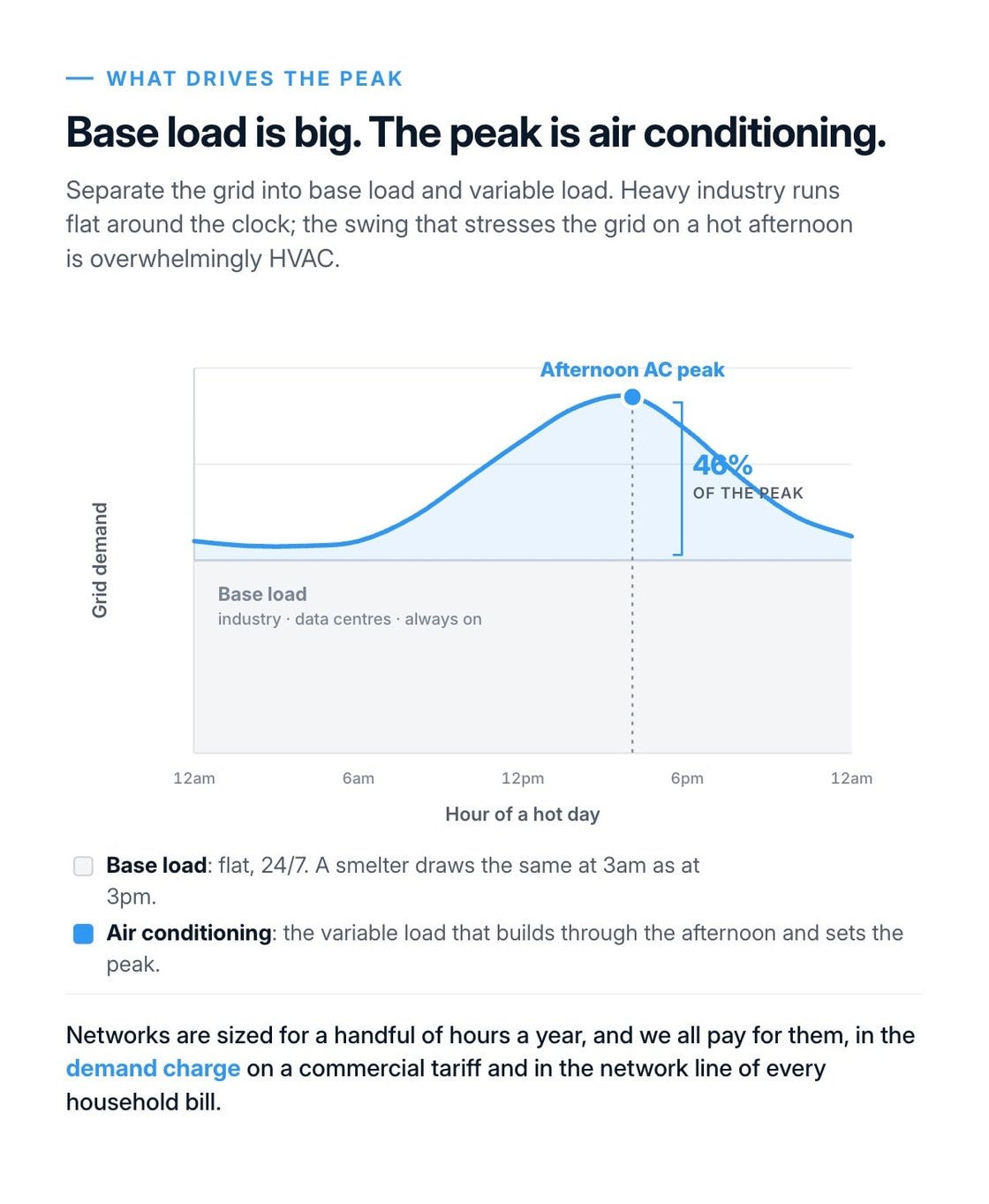
Networks are a shared resource, and we all pay for the peak whether we notice it or not. It sits in the demand charge on a commercial tariff, and it is buried in the network component of every household bill. The structures differ region by region, but the truth underneath is the same everywhere: air conditioning is the major driver of peak demand across the world, and the infrastructure built to serve a handful of hours a year is priced into all of it.
The first fuel
This is why the opportunity of air conditioning is so large. Drop consumption on these big systems by even a few percents during those hours, and the savings go a long way beyond the meter: deferred spending on poles and wires, on distribution, on new generation. The IEA calls energy efficiency the first fuel, and the logic is simple. The cheapest electricity you will ever use is the kilowatt-hour you did not need.
It is also the cheapest decarbonisation measure we have. Stack up the big four levers: efficiency, electrification, decarbonising the grid, and offsets for the hard-to-abate remainder. Efficiency comes out on top on cost every time, and often at negative cost, because the measure pays for itself in saved energy. Better still, the peaks that efficiency shaves are exactly the moments the rest of the decarbonisation story finds hardest to serve.
The problem is that none of this photographs well. There is no ribbon to cut. Nobody gets to stand next to a chilled water plant in a hard hat the way they do next to a new solar field. Tuning HVAC is quiet, technical work that a handful of nerds get excited about, us included. But the numbers are hard to argue with, and the societal return on the investment is enormous. If governments and regulators are looking for the fastest, cheapest lever on both grid stability and emissions, HVAC efficiency should be front and centre.
What we brought home
As I flew back to Australia, two things stayed with me. The first is the pride of the people who run these plants everday. The operators we met measure themselves on conditions maintained and plants run safely, and they have been quietly delivering on that promise for generations. Optimization only works when it respects that. The second is how visible the whole energy system becomes on a 100°F day in Manhattan. One text message from the network operator, and suddenly a hospital plant room plays a vital role in keeping the lights on for a city.
That is it for edition four. Next month we get back on the tools: retrofit equipment selection, and why choosing a new chiller is a twenty-year decision. If you were in New York for the heat wave, or you run a plant through days like these anywhere in the world, hit reply and tell us what it looked like from your side. We read every one.
Iain Stewart
Cofounder & CEO, Exergenics
www.exergenics.com