Seven years of Exergenics
Seven years of Exergenics
This week marks seven years since Exergenics began. A milestone like this is a good excuse to stop and look back, so I went digging through old emails from 2019 and found how I described the company when we were just getting started:
"Using historical BMS data and machine learning, we create models of central plant rooms and then output an optimal control strategy solving for the lowest 'whole of plant' energy use for discrete cooling loads and ambient conditions."
Seven years on, that is still exactly what we do. The models are far more sophisticated. We've deployed in more than 100 plants around the world, modelled thousands of chillers, and those plants typically use between 5% and 20% less energy than before we arrived, with no capital works and no compromise on comfort or reliability. Along the way we've added Pareto trade-offs between energy and mechanical wear, upgrade simulations and plenty more. But the core idea hasn't moved an inch, which I find equal parts surprising and reassuring.
Outsiders, welcomed
Exergenics grew out of research at the University of Melbourne, from a paper with the catchy title "Global Optimisation of Chiller Sequencing and Load Balancing Using Shuffled Complex Evolution", and out of EnergyLab, the accelerator that taught us business 101 and helped us secure our first seed funding.
We were outsiders. We hadn't worked in the industry; my background was applied research in climate change mitigation, building techno-economic models of least-cost decarbonisation pathways. What still strikes me is how the industry embraced us anyway. Countless veterans were happy to sit down, pull our approach apart, offer advice and introduce us to the next person who could help. Backing people willing to have a crack is one of the great parts of Australian culture, and this industry has plenty of it.
The best meeting we ever failed
The major technical breakthrough came in 2021, after what can only be described as a brutal meeting. We had modelled an optimisation strategy for a large Asian property group we had hoped to pilot with, and presented it to their technical team. The strategy was thermodynamically optimal and would have saved energy, but it would have thrown out the plant's mechanical metrics and created a large runtime imbalance between machines. The pilot didn't go ahead. They were right to knock it back, and telling us exactly why was one of the most valuable things anyone has done for us.
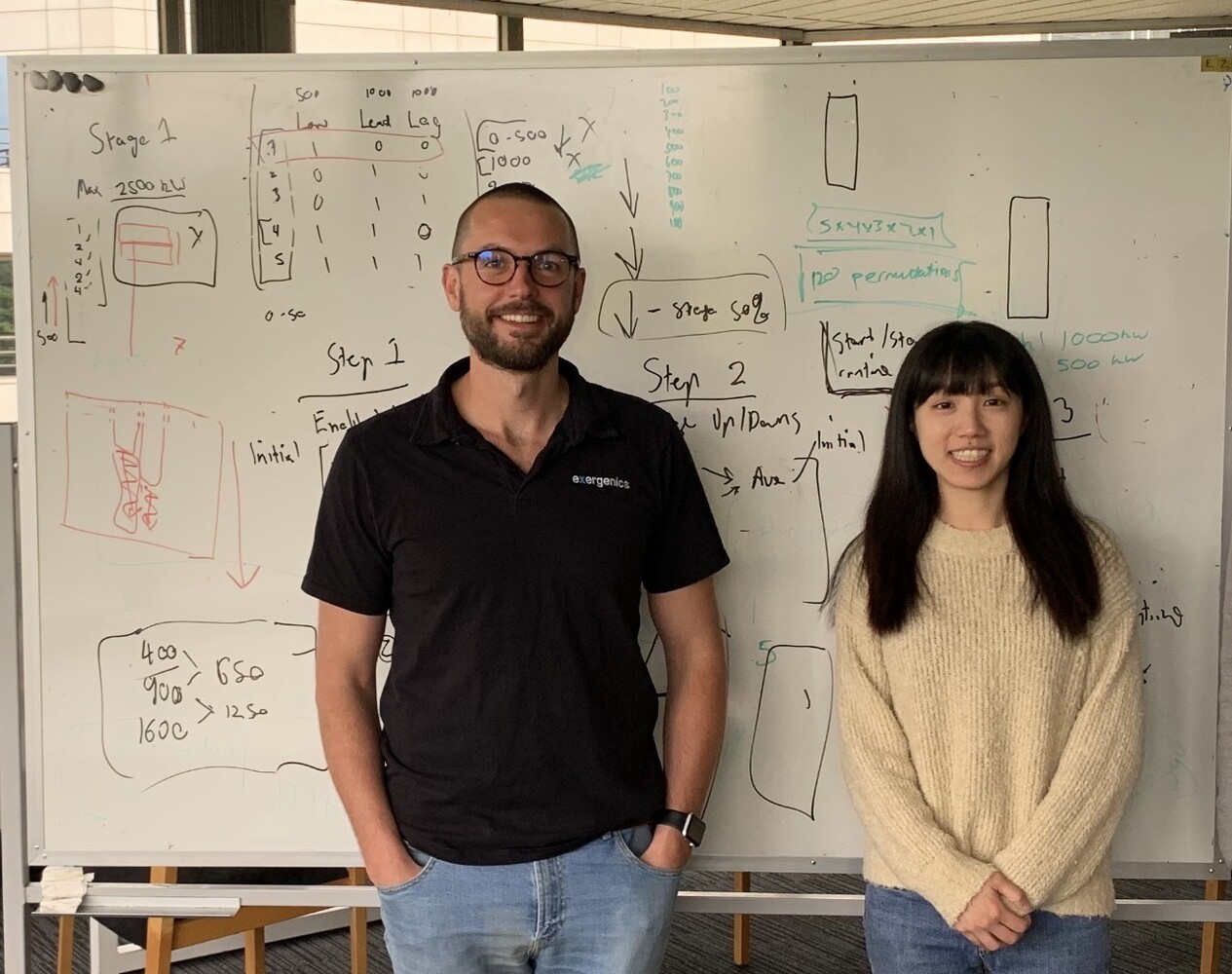
A few days later, on one of my regular lunchtime walks with my dog Rambo through Carlton Gardens, it hit me: the idea for the two-stage optimisation we later patented. It's the only true eureka moment I've had in my life, and I've been chasing that feeling ever since. Back at the office, it took three hours at the whiteboard with a team of our engineers to map out how we would code it up.
Educating a market
What followed was less of a sales push than years of market education. We arrived with a very different approach at a time when "black box" optimisation had made plenty of engineers wary, and rightly so. Ours was the opposite: transparent control strategies that a plant engineer could read, interrogate and challenge before anything touched their plant. Explaining that difference took persistence. A lot of persistence, with a lot of people, and often more than once with the same person. But in those meetings, there was a moment when the penny dropped, and you could see people's eyes light up.
Those people became our early champions, and they changed everything. They allowed us to pilot to prove the technology, then backed us to expand through their portfolios. The University of Melbourne is an example that’s close to home. They became one of our first customers, which felt right given that's where the research originated, and what began as a pilot now runs across the entire Parkville campus, with our algorithms controlling all of the central plants and collectively saving hundreds of tonnes of carbon emissions each year. Through 2022 and 2023, that same pattern repeated with Australian commercial real estate trusts, shopping centres, hospitals, airports, casinos and hotels, and many of those early backers remain long-term customers and friends today.
Taking the model global
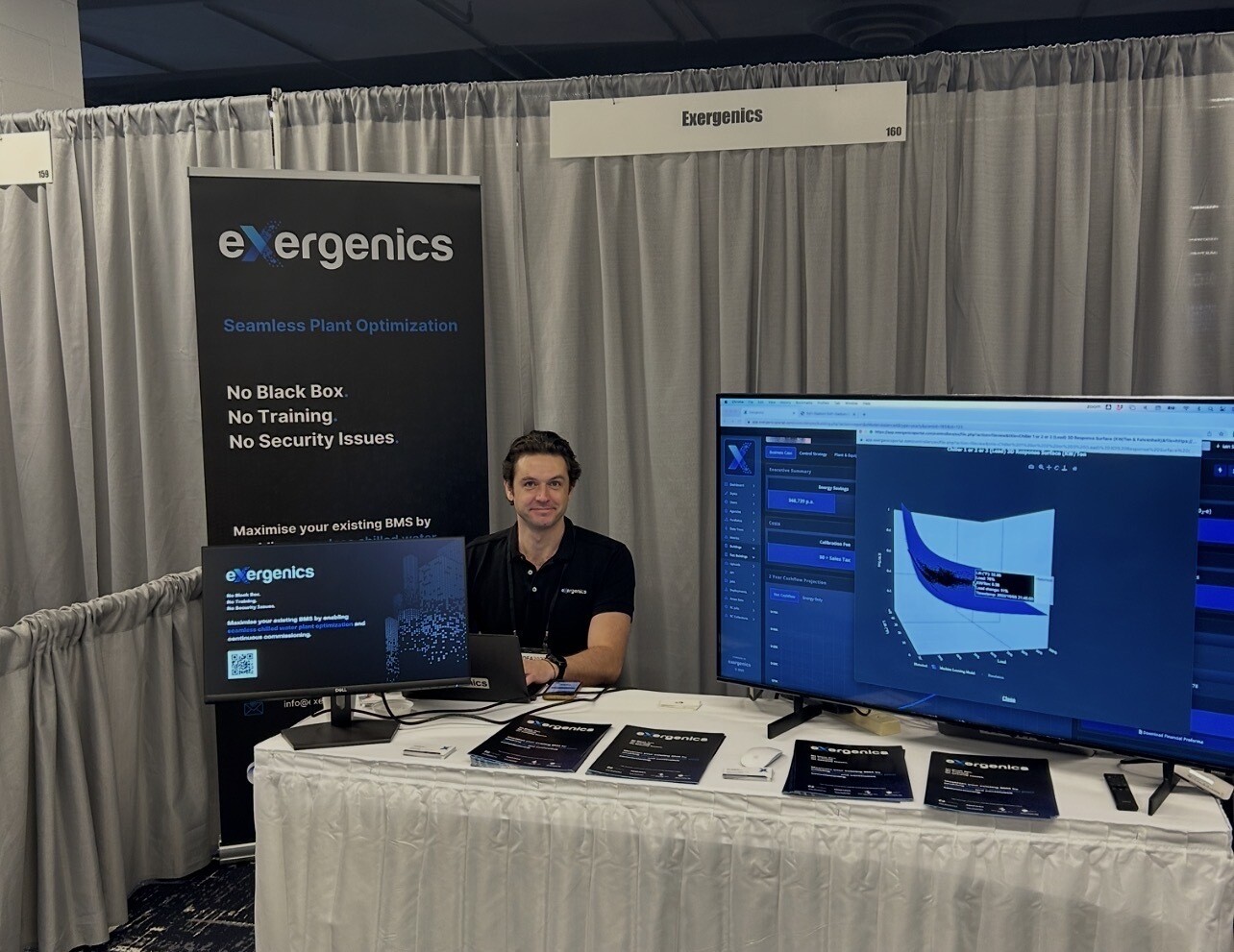
That breadth gave us the confidence to expand into the US in late 2023, with my co-founder and twin brother Tim Stewart leading the charge. It turns out "everything's bigger in the US" holds for air conditioning too. The centralised plants we found in the university sector, hospitals and commercial real estate suited us well, and the US quickly became a major part of the business.
Partners over products
While Tim built the business in the US, we built out our partnership network at home and abroad: mechanical contractors, BMS companies, fault detection and diagnostics providers, other building technology companies, even companies with competing solutions. The industry deserves credit here too. The best people in it recognise that nobody is best at everything, everyone has their niche where they excel, and that the goal is the best outcome for the end client, regardless of the logo on the report.
“Because the truth is, the biggest competitor in HVAC optimisation is not another product. It's doing nothing.”
Every partner out there making the case for tuning and optimisation is growing the opportunity for all of us. I'm very grateful to the partners who took a risk on us early, in Australia and now in the US.
The next seven
So at the seven-year mark: thank you to the customers, partners, staff and investors who backed us along the way.
What excites me most about the years ahead is the R&D. There are still so many interesting problems to solve, models to improve and algorithms to deploy. And for the first time in my living memory, cooling is part of the public conversation. The data centre buildout has put HVAC's electricity and water use into the zeitgeist, and HVAC remains the major driver of peak demand on a grid that is already under stress.
The chilled water plants cooling data centres are the same class of system we've spent seven years learning to optimise, just running harder, denser and with far less tolerance for error. The trade-offs multiply too: energy against water, efficiency against redundancy, all under AI workloads that shift by the hour. At that scale, every point of plant efficiency is megawatts handed back to the grid and megalitres of water saved. These are exactly the problems our approach was built for, and where a lot of our R&D is heading.
That attention is also a huge opportunity to bring more smart people and investment into the industry, researching and building solutions that cut energy, carbon and water use while keeping our buildings comfortable and cool.
If you're managing central plants, data centres or a large portfolio and want to see what transparent optimisation looks like on your own data, get in touch. And if you're an engineer or researcher who wants to work on these problems, we're always keen to hear from smart people willing to have a crack.
Here's to the next seven years.
Iain